The Hidden Conflict in Your Medicine Cabinet: How Everyday Painkillers May Be Undermining Your ED Treatment
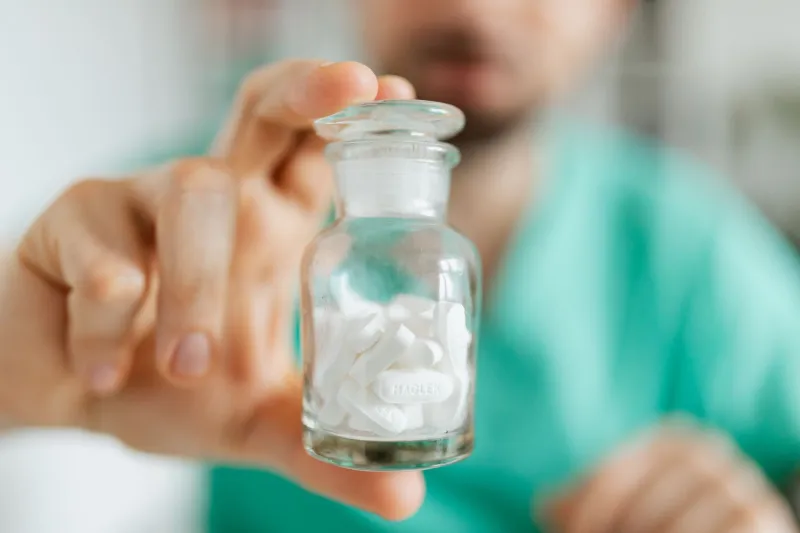
For most men, grabbing a couple of ibuprofen tablets after a long run or a stiff morning is second nature. These over-the-counter painkillers are so familiar, so accessible, and so deeply embedded in American health routines that few people pause to consider what they might be doing inside the body — particularly when other medications are already at work.
If you are currently using a phosphodiesterase type 5 (PDE5) inhibitor such as sildenafil, tadalafil, or vardenafil to manage erectile dysfunction, the relationship between your pain reliever and your ED medication deserves serious attention. The interaction is not always dramatic, and it will not necessarily appear on a standard drug interaction checklist. But the biochemical interference is real, and for men who have found that their ED medication seems inconsistent or less effective than expected, this overlooked variable may help explain why.
How ED Medications Actually Work — And Why Blood Vessels Matter So Much
To understand the conflict, it helps to briefly revisit the mechanism behind PDE5 inhibitors. When sexual arousal occurs, the body releases nitric oxide (NO) into the smooth muscle tissue of the penile arteries. Nitric oxide triggers the production of cyclic guanosine monophosphate (cGMP), a molecule that relaxes vascular smooth muscle and allows blood to flow into the erectile tissue. PDE5 inhibitors work by blocking the enzyme that breaks down cGMP, thereby prolonging and amplifying that relaxation response.
In short, the entire mechanism depends on healthy, responsive blood vessels and robust nitric oxide signaling. Anything that disrupts either of those elements has the potential to blunt the medication's effectiveness.
Where NSAIDs Enter the Picture
Non-steroidal anti-inflammatory drugs — including ibuprofen (Advil, Motrin), naproxen (Aleve), and aspirin at higher doses — work by inhibiting enzymes called cyclooxygenases (COX-1 and COX-2). These enzymes are involved in producing prostaglandins, the compounds responsible for inflammation and pain signaling.
Here is where the overlap becomes clinically significant: prostaglandins also play a supporting role in vascular regulation, including the modulation of nitric oxide synthesis in endothelial cells — the cells lining your blood vessels. When NSAID use suppresses prostaglandin activity broadly, it can secondarily reduce the efficiency of nitric oxide production in vascular tissue.
Additionally, research has pointed to the fact that regular NSAID use is associated with mild but measurable increases in blood pressure in some individuals. Since adequate blood pressure regulation is essential for proper erectile function, even modest increases can create resistance to the vasodilatory effects that ED medications are designed to produce.
A study published in the Journal of Urology found that men who used NSAIDs regularly were significantly more likely to report erectile dysfunction compared to non-users, even after adjusting for age and other health variables. While correlation does not equal causation, the biological plausibility of the relationship is supported by what we know about endothelial function and nitric oxide signaling.
The Occasional Use vs. Chronic Use Distinction
It is important to be precise here. Taking a single ibuprofen tablet for a headache on a Tuesday afternoon is unlikely to meaningfully interfere with an ED medication you plan to use later that weekend. The concern escalates with frequency.
Men who reach for NSAIDs multiple times per week — whether for chronic back pain, arthritis, sports recovery, or persistent headaches — may be creating a sustained suppression of prostaglandin-mediated vascular signaling. Over time, this can contribute to what clinicians sometimes describe as endothelial dysfunction: a reduced capacity of blood vessel walls to respond normally to chemical signals, including those generated by PDE5 inhibitors.
For men in this category, the problem is not that their ED medication is inherently flawed or underdosed. The problem may be that the vascular environment in which the medication is operating has been chronically compromised.
Practical Alternatives Worth Discussing With Your Doctor
If you rely on NSAIDs regularly and are also managing erectile dysfunction, a candid conversation with your physician is warranted. Several alternatives may provide effective pain management without the same vascular implications.
Acetaminophen (Tylenol): Unlike NSAIDs, acetaminophen does not inhibit COX enzymes and does not carry the same prostaglandin-suppressing mechanism. For mild to moderate pain that does not involve significant inflammation — tension headaches, minor muscle soreness — acetaminophen is generally considered a more vascular-neutral option. It is not appropriate for everyone, particularly those with liver concerns, but for many men it represents a reasonable alternative.
Topical NSAIDs: Products such as diclofenac gel (Voltaren) deliver anti-inflammatory effects locally to a joint or muscle group with significantly lower systemic absorption than oral NSAIDs. For localized pain — a sore knee, an inflamed shoulder — topical formulations may reduce the whole-body vascular impact while still providing meaningful relief.
Physical therapy and non-pharmacological approaches: For chronic musculoskeletal pain, structured physical therapy, targeted stretching regimens, and modalities like heat therapy or transcutaneous electrical nerve stimulation (TENS) can reduce dependence on oral NSAIDs without introducing pharmaceutical trade-offs.
Discussing low-dose aspirin separately: Many American men over 50 take low-dose aspirin (81 mg) for cardiovascular protection. This is a separate clinical conversation from pain management and should not be discontinued without physician guidance. The vascular effects of low-dose aspirin are distinct from those of full analgesic doses.
Timing Considerations If You Do Use NSAIDs Occasionally
For men who use NSAIDs infrequently and are not concerned about chronic interference, timing awareness is still reasonable practice. Avoid taking an NSAID in the hours immediately before using your ED medication if possible. While the pharmacokinetic overlap is not dangerous, minimizing simultaneous vascular burden is simply good practice.
Stay well-hydrated, as NSAIDs can affect renal prostaglandins and fluid balance — factors that have downstream effects on circulatory efficiency.
A Note on Supplements That Behave Similarly
It is also worth noting that certain supplements popular among American men — including high-dose fish oil, white willow bark, and some herbal anti-inflammatories — carry prostaglandin-modulating properties that may produce analogous, if milder, effects. If you are taking a broad array of supplements alongside your ED medication, a comprehensive review with your prescribing physician or pharmacist is advisable.
The Takeaway
The medicine cabinet is rarely as simple as it appears. Medications and supplements that seem entirely unrelated to sexual health can, through shared biochemical pathways, quietly influence the environment in which your ED treatment operates. Common NSAIDs are not dangerous companions to PDE5 inhibitors in the acute sense — but for men using these pain relievers with any regularity, the cumulative effect on nitric oxide signaling and vascular responsiveness is a factor worth taking seriously.
The most effective ED treatment plan is one that accounts for your whole pharmacological picture — not just the prescription in your drawer, but everything else you reach for on an ordinary day.