Why Poor Sleep May Be Quietly Canceling Out Your ED Medication
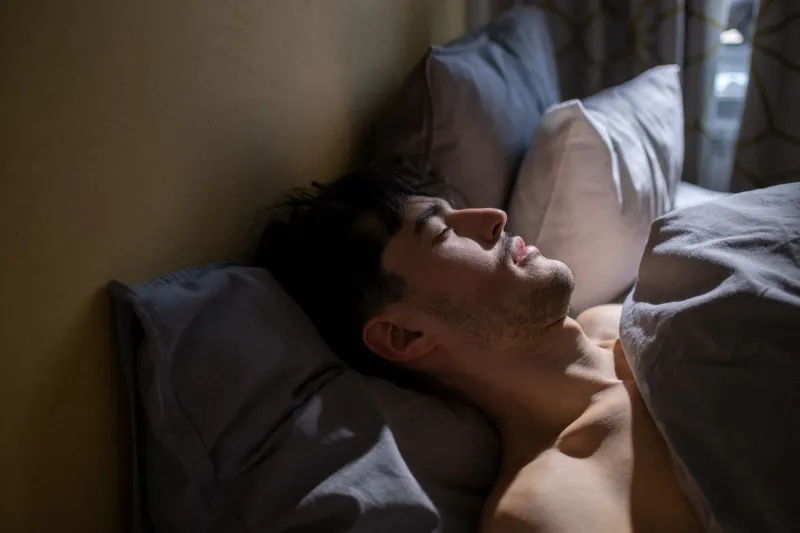
You take your medication as directed. You follow your physician's guidance. Yet something still feels off — the results are inconsistent, the response is weaker than expected, or the treatment simply isn't delivering what it promised. If this sounds familiar, the answer may not be in your prescription bottle. It may be in your bedroom — specifically, in the quality of sleep you're getting each night.
Sleep is not passive recovery. It is an active, biologically complex process during which your body performs critical maintenance on virtually every system involved in erectile function. When that process is disrupted — whether by insomnia, sleep apnea, irregular schedules, or chronic sleep restriction — the consequences extend far beyond fatigue. They reach directly into the physiological mechanisms your ED medication relies on to work.
Testosterone and the Overnight Window You Can't Afford to Miss
The relationship between sleep and testosterone is one of the most well-documented in endocrinology, yet it remains underappreciated in everyday men's health conversations. The majority of daily testosterone production occurs during sleep, with peak secretion tied closely to the early cycles of slow-wave sleep. Studies published in peer-reviewed journals, including research from the University of Chicago, have demonstrated that restricting sleep to five hours per night for just one week can reduce daytime testosterone levels by 10 to 15 percent in healthy young men.
For men using PDE5 inhibitors — the class of drugs that includes sildenafil and its generic equivalents — this matters enormously. These medications work by enhancing blood flow in response to sexual stimulation, but they do not generate desire or arousal independently. Testosterone is the hormonal engine behind libido and the neurological signals that initiate an erection. When testosterone is suppressed by poor sleep, the entire cascade that ED medication is designed to support becomes compromised before it even begins.
Circadian Rhythm Disruption and Vascular Health
Your circadian rhythm governs far more than your sleep-wake cycle. It regulates blood pressure patterns, endothelial function, and the production of nitric oxide — the molecule responsible for relaxing smooth muscle tissue in penile arteries and enabling increased blood flow. This is the exact mechanism that PDE5 inhibitors are designed to amplify.
When circadian rhythms are disrupted — a common consequence of shift work, late-night screen exposure, irregular sleep schedules, or chronic insomnia — nitric oxide bioavailability decreases and vascular inflammation increases. Research published in the Journal of the American Heart Association has linked poor sleep quality to measurable declines in endothelial function, the same vascular dysfunction that underlies a significant proportion of organic erectile dysfunction cases in American men.
In practical terms, this means that if your vascular system is operating in a sleep-deprived state, your ED medication is working against a biological headwind. The drug's ability to sustain vasodilation is blunted by an environment that is actively producing inflammation and reducing the very substrates the medication needs.
Sleep Apnea: The Overlooked Comorbidity
Obstructive sleep apnea (OSA) affects an estimated 30 million Americans, and a substantial portion of those individuals remain undiagnosed. The condition causes repeated interruptions in breathing throughout the night, triggering oxygen desaturation events that place significant stress on the cardiovascular system.
The connection to erectile dysfunction is direct and well-established. OSA disrupts REM sleep — the stage during which nocturnal penile tumescence (NPT) occurs. NPT, the natural erections men experience during sleep, serves a physiological purpose: it oxygenates penile tissue and maintains the health of erectile structures. Men who lack adequate REM sleep due to apnea are depriving this tissue of regular oxygenation, which over time contributes to fibrotic changes that make erections progressively more difficult to achieve.
If you are using ED medication and experiencing inconsistent results, discussing a sleep study with your physician is a clinically reasonable step. Treatment of OSA — typically through continuous positive airway pressure (CPAP) therapy — has been shown in multiple studies to improve erectile function independently, and may significantly enhance your response to pharmacological treatment.
Cortisol, Stress, and the Hormonal Cascade That Follows a Bad Night
Sleep deprivation reliably elevates cortisol, the body's primary stress hormone. While cortisol serves important functions in short bursts, chronically elevated levels are antagonistic to sexual function. High cortisol suppresses testosterone production, constricts blood vessels, increases sympathetic nervous system activity, and creates a physiological state that is essentially incompatible with sexual arousal.
This is not merely a psychological phenomenon. The sympathetic nervous system — the "fight or flight" branch — actively inhibits erection. An erection requires parasympathetic dominance, a state of physiological calm. When sleep deprivation keeps cortisol elevated throughout the day, achieving that parasympathetic state becomes substantially more difficult, regardless of what medication you have taken.
Practical Sleep Optimization Strategies for Men on ED Treatment
The science points clearly toward sleep as a modifiable variable in ED treatment outcomes. The following strategies are grounded in sleep medicine research and are specifically relevant for men who want to maximize the effectiveness of their treatment.
Protect your sleep window. Aim for seven to nine hours of sleep per night, as recommended by the American Academy of Sleep Medicine. Consistency matters as much as duration — going to bed and waking at the same time daily stabilizes circadian rhythms and improves hormonal regularity.
Reduce blue light exposure before bed. Screens emit light in wavelengths that suppress melatonin production and delay sleep onset. Limiting screen use in the 60 to 90 minutes before bed can meaningfully improve sleep quality and, by extension, the hormonal environment during sleep.
Evaluate your sleep environment. Room temperature between 65 and 68 degrees Fahrenheit has been identified in sleep research as optimal for deep sleep. Darkness and noise reduction also contribute to more restorative sleep cycles.
Discuss alcohol use with your physician. Many men are unaware that alcohol, while it may induce drowsiness, significantly suppresses REM sleep and reduces sleep quality. It also independently impairs erectile function and can interact with certain ED medications in ways worth discussing with a healthcare provider.
Consider a sleep screening if symptoms warrant it. Loud snoring, waking unrefreshed, or a partner reporting observed breathing pauses are indicators that a sleep study may be appropriate. Treating underlying sleep disorders can have meaningful downstream effects on treatment outcomes.
The Integrated Approach to ED Treatment
Pharmacological treatment for erectile dysfunction is a well-validated, effective intervention for millions of American men. But medication functions within a biological context — and that context is shaped significantly by sleep. When sleep is adequate and restorative, the hormonal, vascular, and neurological conditions that support erectile function are optimized. When it is not, even a well-chosen, correctly dosed medication is operating at a disadvantage.
Thinking of sleep not as a lifestyle preference but as a clinical variable in your treatment plan is a meaningful shift in perspective — and one that the evidence strongly supports. If your current results are falling short of expectations, it may be time to look at what's happening in the hours before you ever reach for your medication.