When the Antidepressant Is Working and the Bedroom Isn't: Navigating SSRI-Induced Erectile Dysfunction
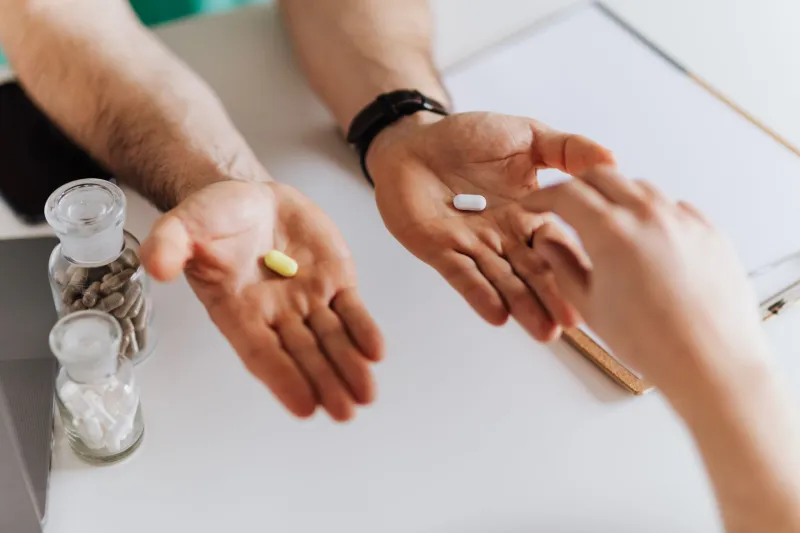
There is a particular frustration that comes with successfully treating one health condition only to find that the treatment itself introduces a new problem. For a substantial number of American men taking selective serotonin reuptake inhibitors (SSRIs) or serotonin-norepinephrine reuptake inhibitors (SNRIs) for depression or anxiety, this frustration takes the form of erectile dysfunction — a side effect that is both common and commonly left undiscussed between patients and their prescribers.
The irony is not lost on those who experience it. Depression itself is a well-documented contributor to sexual dysfunction. When the medication resolves the depression but introduces new sexual difficulties, men are left uncertain whether they are better or worse off — and reluctant to raise the subject with their doctor for fear of appearing ungrateful for a treatment that is otherwise working.
Understanding what is actually happening, and what can be done about it, begins with recognizing that antidepressant-induced erectile dysfunction is a pharmacologically distinct condition from the vascular ED that most treatment frameworks are built around.
Two Different Problems, Two Different Mechanisms
The vast majority of erectile dysfunction encountered in clinical settings — and the primary target of PDE5 inhibitor medications like sildenafil — is rooted in vascular and endothelial dysfunction. Inadequate blood flow, impaired nitric oxide signaling, and arterial stiffness are the central villains. The medications work by enhancing nitric oxide's vasodilatory effects and allowing greater blood flow into penile tissue.
Antidepressant-induced erectile dysfunction does not originate in the blood vessels. It originates in the central nervous system, and specifically in the neurochemical shifts produced by the medications themselves.
SSRIs work by blocking the reuptake of serotonin in synaptic clefts, increasing serotonin availability throughout the brain. While this mechanism relieves depressive symptoms, serotonin's broader role in the nervous system includes inhibitory effects on sexual function. Elevated serotonin activity suppresses dopamine release — and dopamine is a critical driver of sexual desire, arousal, and the neurological initiation of erection. Serotonin also stimulates 5-HT2 receptors that directly inhibit erection and ejaculation.
SNRIs add norepinephrine reuptake inhibition to the equation, which introduces additional sympathomimetic effects that can further complicate the sexual response cycle.
The result is a form of erectile dysfunction that may present alongside normal libido in some men and reduced libido in others, is often accompanied by delayed or absent orgasm, and does not respond to PDE5 inhibitors with the same reliability seen in vascular ED.
How Common Is This — and Why Don't Men Report It?
Estimates of sexual dysfunction rates among SSRI users vary widely in the literature, partly because study methodologies differ and partly because underreporting is endemic to this population. When researchers use standardized, validated questionnaires rather than relying on spontaneous patient reports, the rates climb substantially — some studies placing the prevalence of some form of sexual dysfunction in SSRI users at between 40 and 70 percent.
Men are particularly unlikely to report these side effects voluntarily. A combination of embarrassment, reluctance to jeopardize a mental health treatment that is otherwise helping, and a cultural tendency to minimize sexual health concerns conspires to keep these conversations out of the exam room. Many men quietly discontinue their antidepressants — often abruptly — without informing their prescriber, citing side effects they never disclosed.
This outcome is among the most clinically concerning consequences of the silence around antidepressant-induced sexual dysfunction. Abrupt discontinuation of SSRIs and SNRIs carries its own risks, including discontinuation syndrome and depressive relapse.
Why Standard ED Medications Sometimes Underperform in This Context
PDE5 inhibitors are not without utility for men with antidepressant-induced ED — clinical evidence does support their use in this population, and many men experience meaningful benefit. However, their effectiveness is generally less predictable and often less robust than in vascular ED, because they are addressing a downstream vascular mechanism while the primary disruption is occurring upstream, at the level of central neurochemical signaling.
A man whose erectile difficulties stem from dopamine suppression and serotonin-mediated inhibition of the erectile reflex may find that even maximal doses of a PDE5 inhibitor provide incomplete resolution. This is not a failure of the medication in the conventional sense — it is a mismatch between the tool and the mechanism it is being asked to address.
This distinction matters enormously for how the conversation with a prescribing physician should be framed.
Evidence-Based Options Worth Discussing With Your Prescriber
Several approaches have demonstrated clinical utility in managing antidepressant-induced erectile dysfunction. None of these should be pursued unilaterally — each requires a conversation with the prescriber managing both the mental health treatment and any sexual health interventions.
Dose adjustment. Sexual side effects from SSRIs and SNRIs are dose-dependent in many patients. A modest reduction in daily dose, if clinically appropriate given the mental health response, may meaningfully improve sexual function without compromising antidepressant efficacy. This is always the first conversation worth having.
Medication timing strategies. Some clinicians and patients have explored the practice of timing the antidepressant dose to minimize peak plasma levels during anticipated sexual activity — sometimes referred to informally as "drug holidays" or strategic dose timing. The evidence base for this approach is mixed, and it carries risks including breakthrough depressive symptoms and inconsistent medication levels. It should only be considered under direct physician guidance.
Switching to antidepressants with more favorable sexual side effect profiles. Not all antidepressants carry equivalent sexual dysfunction risk. Bupropion (Wellbutrin), which works primarily on dopamine and norepinephrine rather than serotonin, has consistently demonstrated lower rates of sexual side effects in comparative studies and is sometimes used as an augmentation agent alongside an SSRI specifically to counteract sexual dysfunction. Mirtazapine is another option with a distinct receptor profile that many patients tolerate better sexually. These alternatives may not be appropriate for every patient, but they represent a legitimate clinical conversation.
Adjunctive use of PDE5 inhibitors with realistic expectations. For men whose antidepressant-induced ED has a meaningful vascular component — or who respond partially to PDE5 inhibition — these medications remain a reasonable part of the treatment picture. The key is calibrating expectations and ensuring that both the prescribing physician and any treating urologist are aware of the full medication picture.
Phosphodiesterase inhibitors and augmentation strategies under investigation. Emerging research continues to examine adjunctive pharmacological strategies for antidepressant-induced sexual dysfunction, including the use of low-dose agents that specifically target the serotonergic inhibition of sexual function. This remains an active area of clinical investigation.
Opening the Conversation
The most important step for men experiencing antidepressant-induced erectile dysfunction is initiating an honest, specific conversation with their prescriber. Framing the discussion clearly — distinguishing between loss of desire, difficulty achieving erection, and difficulty reaching orgasm — gives the clinician the information needed to recommend the most targeted approach.
Mental health treatment and sexual health are not competing priorities. In most cases, a prescriber who is fully informed can find a path that supports both. The barrier is almost always the conversation that has not yet happened.